
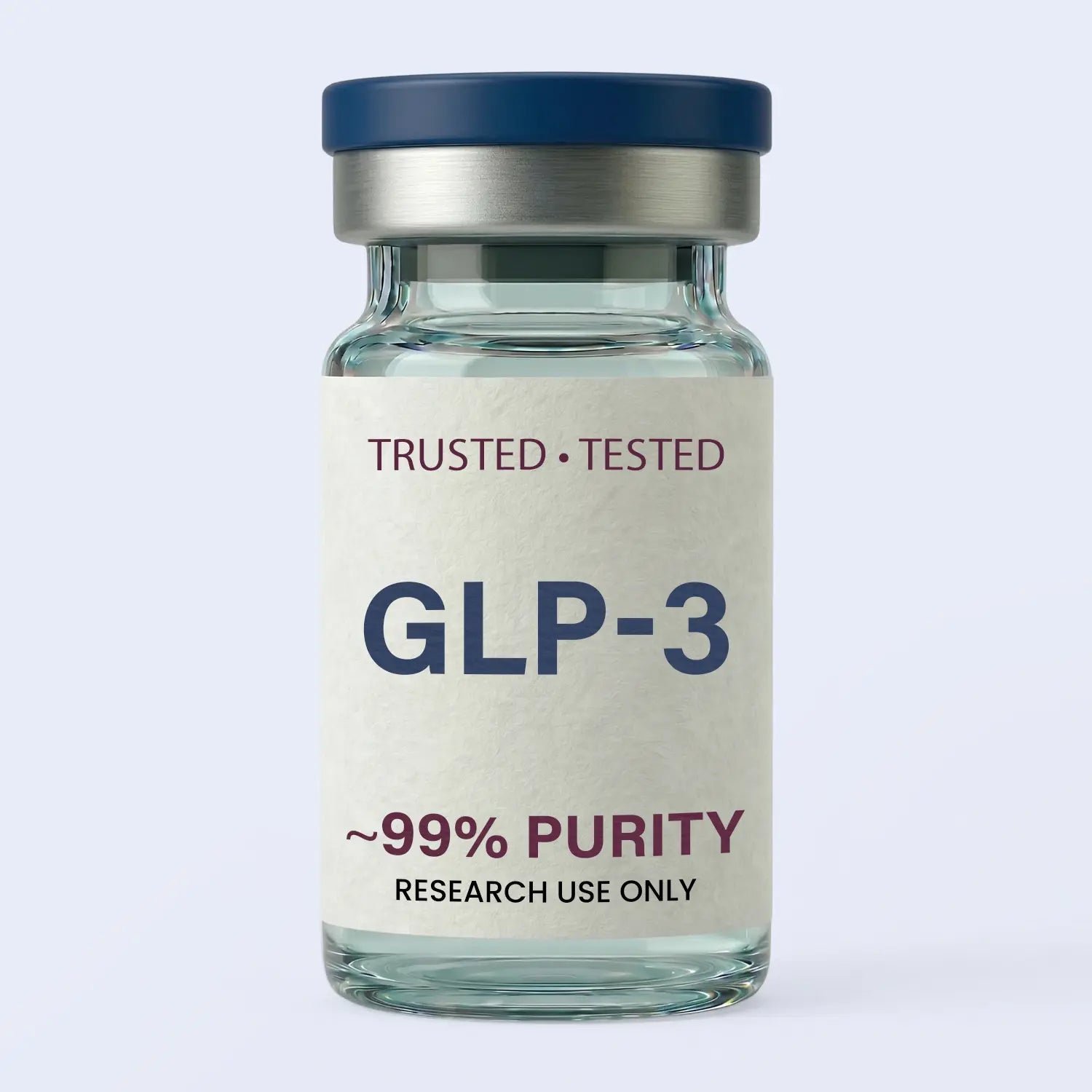
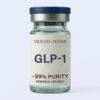
RT-GLP3
$128.00
10 MG
1000 in stock
🔥 Exclusive Crypto Offer
Get an INSTANT 15% DISCOUNT when you pay with Bitcoin, Ethereum, Dogecoin, Bitcoin Cash, XRP, Solana, or USDT.
⚡ Don't have crypto? Buy it here in 5 minutes with easy guidance.
💡 Pro Tip: You can also pay with cryptocurrency using your verified Cash App or PayPal account for a fast and secure checkout!
RT-GLP3
Lyophilized Multi-Receptor Agonist | In Vitro Research
A novel, single-molecule polypeptide engineered for advanced metabolic research into GLP-1, GIP, and glucagon receptor signaling.
⚠️ **RESEARCH USE ONLY:** This product is sold strictly for in vitro laboratory research and development purposes ONLY. It is NOT intended for human or veterinary use.
Properties
| Product Name: | RT-GLP3 |
|---|---|
| Synonyms: | Retatrutide |
| Vial Contents: | Lyophilized Powder |
| Purity: | ~99% (HPLC) |
| CAS Number: | 2381089-83-2 |
| PubChem CID: | 474492235 |
| Molecular Formula: | C223H343F3N46O70 |
| Molecular Weight: | ~4845.444 g/mol |
Product Details
Description:
RT-GLP3 is a synthetic peptide and a novel multi-receptor agonist. It is a single-molecule polypeptide engineered for stability and activity at three different receptors involved in metabolic regulation: the glucagon-like peptide-1 (GLP-1), glucose-dependent insulinotropic polypeptide (GIP), and glucagon receptors.
In a research context, Retatrutide is a subject of intense interest due to its tri-agonist mechanism. It is used as a tool in advanced metabolic research to investigate the complex and potentially synergistic effects of combined GLP-1, GIP, and glucagon receptor agonism in various controlled laboratory settings and cell culture models.
Intended Use
- This product is sold strictly for in vitro laboratory research and development purposes ONLY.
- It is NOT intended for human or veterinary use, consumption, diagnostics, therapeutic applications, or any other use outside of controlled laboratory research.
- Retatrutide, as supplied, is an experimental compound intended for scientific investigation into the complex mechanisms of combined GLP-1, GIP, and glucagon receptor agonism in controlled laboratory settings.
- This product is NOT an FDA-approved drug, dietary supplement, or cosmetic or intended for any clinical use.
Handling and Storage
- Storage: Store lyophilized product at −20°C to −80°C. Protect from moisture and light. Store reconstituted product at 2°C to 8°C (standard refrigerator temperature).
- Reconstitution: Reconstitute with appropriate sterile laboratory solvents (e.g., sterile water, bacteriostatic water) immediately prior to research use, following established laboratory protocols for peptide handling.
- Safety: Handle using appropriate personal protective equipment (PPE) such as gloves, lab coat, and eye protection, within a controlled laboratory environment.
Quality Assurance
- Our Retatrutide is synthesized to high purity specifications, verified by analytical methods such as HPLC and Mass Spectrometry.
- Purity and content is verified for every batch through third-party testing.
Further Information and Verification
For chemical properties, identifiers, and links to related research for Retatrutide, you can search its CAS number (2381089-83-2) or name on the PubChem website. A direct link to the entry is: https://pubchem.ncbi.nlm.nih.gov/compound/Retatrutide.
Disclaimer
Purchase of this product signifies an agreement that it will be used solely for legitimate laboratory research purposes by qualified individuals trained in laboratory procedures and safety. The buyer assumes all responsibility for the proper handling, storage, use, and disposal of this product. The seller makes no claims regarding the suitability of this product for any particular research application beyond its specified chemical identity and purity. This product has not been evaluated by the Food and Drug Administration and is not intended to diagnose, treat, cure, or prevent any disease or condition. All product descriptions and details found on this website are intended for educational, research and informational purposes only.
COA Test Results
10 MG – GP3J01301 – Purity & Endotoxin – 05/16/2026
10 MG – GP3J01301 – Purity & Endotoxin – 05/16/2026
20 MG – GP3J01302 – Purity & Endotoxin – 03/09/2026
30 MG – GP3L0128 – Purity & Endotoxin – 02/04/2026
10 MG – GP30904J – Endotoxin – 09/15/2025
24 MG – RG15608J – Endotoxin – 08/20/2025
16 MG – RG15608J – 07/22/2025 – Endotoxin
Related products
Metabolic Compounds
Metabolic Compounds
Gerontology Research
Metabolic Compounds
Peptides
Metabolic Compounds
Metabolic Compounds


Metabolic Compounds